
Does the Right Boat Actually Catch More Fish? How to Choose the Best Boat for Your Fishing Style, Budget & Lifestyle
By Captain Ricky Wheeler | Saltwater Euphoria | Boat Buying & Yacht Sales
If you've ever spent time around serious fishermen, you've probably heard the debate: Does a bigger boat catch more fish? Is a faster boat better offshore? Is a custom sportfish really worth the money? Can a center console compete with a traditional convertible sportfish? And when it comes to actually putting fish in the boat, how much does the boat itself matter?
These are questions I get asked regularly, and they're exactly what I wanted to explore in Episode 94 of the Saltwater Euphoria Podcast.

After more than two decades of running, owning, fishing, rebuilding, and consulting on boats around the world, I've developed a pretty strong appreciation for what makes a boat genuinely good at what it does. I've spent time aboard everything from high-performance center consoles to custom sportfish boats, traditional convertibles, express boats, and everything in between, and here's what I've learned: The best boat isn't necessarily the biggest, fastest, newest, or most expensive. It's the boat that best matches the way you fish, where you fish, and how you actually intend to use it.
And that distinction can make an enormous difference in your fishing experience, your ownership costs, and ultimately your satisfaction with the boat.
Does a Bigger Boat Actually Catch More Fish?

A larger boat can provide significant advantages offshore. More fuel capacity can mean greater range. A heavier hull may offer a more comfortable ride in certain sea conditions. A larger cockpit can make fishing multiple anglers easier, while additional accommodations can make overnight trips and extended travel considerably more enjoyable.
But bigger boats also come with tradeoffs. They generally cost more to purchase, operate, maintain, store, and repair. They can require more crew, more fuel, and significantly more infrastructure to keep them running properly.
More importantly, a bigger boat doesn't automatically put you in better position to catch fish.
If you're primarily fishing relatively close to home, running day trips, or targeting specific fisheries where speed and flexibility matter, a smaller, well-designed boat might actually provide more fishing opportunities for your particular program.
The real question isn't how big your boat is. It is whether the boat gives you the capabilities you need to fish effectively.
Center Console vs. Express vs. Convertible Sportfish: Which Boat Is Actually Better?
This is one of the most common comparisons I see among anglers shopping for their next boat. Honestly, all three can be excellent choices. They simply accomplish different things.

Center Console Boats: Speed, Versatility & Fishing Flexibility
Modern center console boats have become incredibly capable fishing machines.
With increasingly sophisticated hull designs, large outboard power packages, impressive electronics, and innovative layouts, today's center consoles can cover enormous amounts of water in a relatively short period of time.
For many anglers, that speed translates into flexibility.
You can leave the inlet early, run offshore, fish multiple locations, and get home relatively quickly when conditions or circumstances change.
Center consoles are particularly attractive for:
Offshore day fishing and canyon trips
Inshore and nearshore fishing
Family boating and recreational use
Tournament fishing where mobility matters
Anglers who prioritize speed and versatility
There are also tremendous differences between center consoles themselves. A lightweight, high-performance boat designed around speed and efficiency is not necessarily the same experience as a heavier offshore center console built for long runs and challenging conditions.
What I like: Flexibility, speed, cockpit access, relatively straightforward layouts, and the ability to use the boat for multiple purposes.
What you need to consider: Ride characteristics, range, fuel consumption, weather exposure, storage, and how comfortable the boat really is when conditions deteriorate. Notice I higlighted fuel consumption. If you plan to run 80-100 miles out and back, be sure your center console you are looking to buy has the range. Many center consoles either do not have the fuel capacity, or they burn much more than expected due to teh great speed race and builders slapping numerous high horsepower outboards on the back of these boats.
Express Sportfishers: A Great Balance Between Fishing & Comfort
Express sportfish boats occupy an interesting middle ground.
They combine an offshore fishing cockpit with a protected helm, accommodations, and many of the comforts associated with larger sportfishing boats.

For anglers who want to fish hard but don't necessarily want a full flybridge convertible, an express can be a particularly compelling option.
They're attractive for:
Offshore fishing and canyon trips
Overnight fishing excursions
Couples or families who want accommodations
Owners who appreciate a protected helm
Anglers looking for a balance between fishing and cruising
One of the biggest advantages is the ability to enjoy a more protected environment without giving up a serious fishing cockpit.
However, an express boat's layout, visibility, ventilation, access to the cockpit, and overall fishing ergonomics can vary substantially between manufacturers and models.
Those details matter a lot more than simply comparing length or horsepower.
Convertible Sportfish Boats: The Traditional Offshore Fishing Platform
For many serious offshore anglers, the convertible sportfish remains the benchmark.
A traditional convertible offers a raised helm station, substantial cockpit space, accommodations below, and a layout designed around offshore fishing.
Depending on the boat, you may also gain:
Excellent visibility from the bridge
Large fishing cockpits
Substantial fuel capacity
Long-range offshore capabilities
Comfortable accommodations for extended trips
Space for a dedicated crew or multiple anglers
This is particularly attractive for anglers who spend significant time offshore, fish overnight, travel between destinations, or operate more involved fishing programs.
But there's an important distinction between a convertible that looks impressive and one that actually functions well as a fishing boat.
Cockpit dimensions, engine room access, visibility, fuel capacity, hull design, and overall condition can make dramatically different boats feel completely different on the water.
And when you're shopping for a used sportfish, those differences become even more important.

Custom Sportfish vs. Production Boats: Is a Custom Boat Worth It?
This is another subject that deserves more attention than it usually gets.
Custom sportfish boats can offer exceptional craftsmanship, unique layouts, tailored performance characteristics, and features specifically designed around the owner's preferences. A well-executed custom build can be an incredible fishing platform.
But custom doesn't automatically mean better.
Production boats have evolved tremendously. Many manufacturers are building extremely capable offshore fishing boats with sophisticated engineering, excellent construction, and well-developed layouts. The advantage of production boats is often predictability. You have established designs, comparable boats, known specifications, and a more straightforward process when evaluating different models.
Custom boats, meanwhile, can vary considerably depending on the builder, the original design, the construction process, and how the boat has been maintained or modified over its life.
The important lesson: Don't buy the reputation of a builder alone. Buy the actual boat, its engineering, its condition, its layout, and its suitability for your needs.
That applies whether you're shopping for a new boat or a 20-year-old custom sportfish.
Speed vs. Range: What Matters More Offshore?
This is where many boat buyers get caught up in the numbers. Everybody loves talking about top speed. It's exciting to see a boat run 50, 60, or even 70 knots.
But how often are you actually running at that speed?
When you're planning offshore fishing trips, range, fuel capacity, cruising efficiency, and the ability to safely reach your fishing grounds can be far more important than maximum speed.
A boat that burns enormous amounts of fuel at high speed may be impressive, but it doesn't necessarily make it the best choice for your fishing program.
You need to consider:
How far offshore you intend to fish
Your normal cruising speed
Fuel consumption at realistic operating speeds
Reserve fuel requirements
Sea conditions and how they affect speed
How much time you actually want to spend running versus fishing
The boat's performance at a comfortable, sustainable cruising speed often tells you far more about its practical usefulness than a top-speed number.
And don't overlook the importance of fuel capacity. A boat with excellent efficiency but insufficient fuel capacity for your intended trips may not be the right offshore platform either.
Hull Design & Ride Quality: The Part of Boat Shopping You Shouldn't Ignore
Two boats with similar dimensions and horsepower can perform very differently in the same conditions. Hull design, weight, beam, deadrise, construction, running surface, and overall boat geometry all influence how a boat behaves underway.
Some boats are designed to prioritize speed and efficiency. Others emphasize comfort, stability, or the ability to handle challenging offshore conditions.
There isn't a single hull design that is perfect for every application.
What matters is understanding how the boat behaves in the conditions you're realistically going to encounter. If you're primarily running short offshore trips in relatively favorable weather, your priorities may be different from someone who regularly makes long canyon runs or travels between offshore destinations.
And remember: a boat's reputation for having a great ride is not a substitute for evaluating the specific boat, its loading, its condition, and how it performs in a sea trial.
What Actually Makes a Boat Fish Well?
This is where I think experienced anglers should spend a lot more time when evaluating boats. A boat can look fantastic at the dock and still be frustrating to fish.
The cockpit is one of the most important areas to evaluate.
Think about how many anglers you typically fish with. Consider how you troll, drift, chunk, jig, or fight fish. Look at the amount of usable space, the arrangement of seating, the position of rod holders, access to the transom, and how people move around the boat.
Some important considerations include:
Cockpit size: Is there enough room to fish comfortably with your normal crew?
Layout: Can anglers move around without constantly getting in one another's way?
Transom design: Does it make fighting and landing fish easier?
Rod storage: Is tackle accessible and organized?
Electronics: Are the displays, transducers, radar, and other systems suited to your fishing?
Helm ergonomics: Can you operate the boat comfortably and effectively?
Storage: Is there enough space for tackle, equipment, and provisions?
Engine and mechanical access: Can the boat be serviced without unnecessary difficulty?
These details are often the difference between a boat you enjoy fishing and one that continually frustrates you.
Downeast Boats & Other Offshore Fishing Options
Downeast-style boats deserve a place in this conversation, especially for anglers who value a protected helm, practical accommodations, and a different approach to offshore fishing. They can be particularly appealing for regional fisheries, cruising, and owners who appreciate a more traditional design. But as with every category, the individual boat matters.
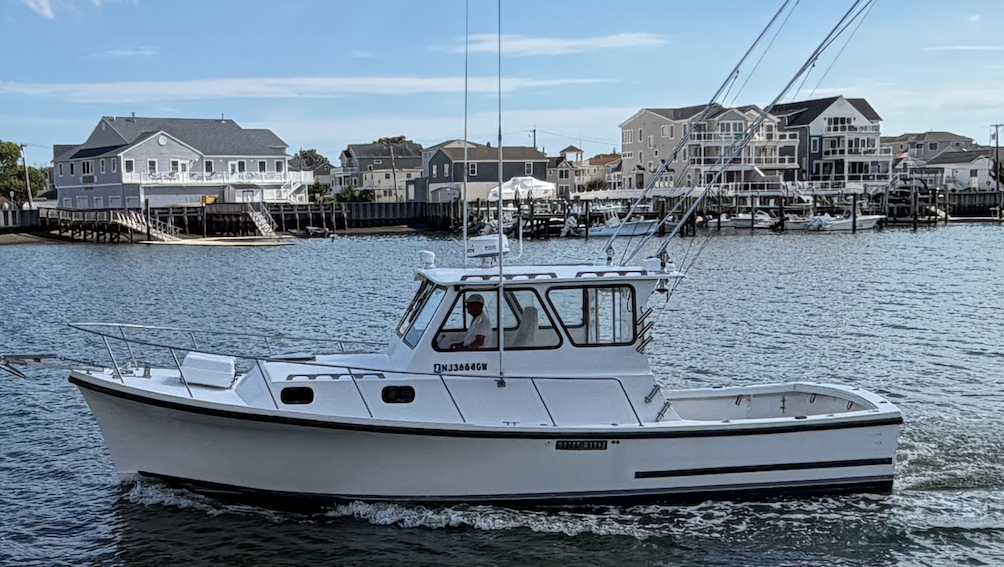
A Downeast boat designed primarily for efficient cruising may not offer the same cockpit ergonomics or offshore performance characteristics as a purpose-built sportfish. The same principle applies to catamarans, walkarounds, dual consoles, and other fishing boat designs.
There is no reason to limit your search to one category before you've established what you actually need.
The Hidden Cost of Owning a Boat: Purchase Price Is Only the Beginning
One of the biggest mistakes I see boat buyers make is focusing almost exclusively on the purchase price.
The reality is that ownership costs can vary dramatically depending on the boat, its age, its power package, where it's kept, and how frequently it's used.
Before buying, you should have a realistic understanding of:
Fuel consumption
Engine maintenance
Generator and mechanical maintenance
Insurance
Dockage or marina costs
Winter storage and haul-out
Bottom maintenance
Electronics upgrades
Repairs and unexpected expenses
Crew or captain expenses, if applicable
A smaller boat isn't necessarily inexpensive to operate, and a larger boat isn't automatically a bad financial decision. The key is understanding the actual ownership commitment before you buy.
How I Would Approach Buying Your Next Boat
If you're shopping for your first serious fishing boat, upgrading your current boat, or considering a larger sportfish, I would start with a few fundamental questions.
1. Where Are You Actually Going to Fish?
Are you fishing inshore, nearshore, offshore, or making regular canyon runs?
Do you plan to fish locally, travel to different destinations, or operate a boat in multiple fisheries?
Your intended fishing grounds should influence everything from hull design to fuel capacity and accommodations.
2. What Kind of Fishing Do You Enjoy?
Are you primarily trolling for tuna and marlin? Fishing for mahi? Chunking, jigging, or drifting? Fishing tournaments? Or looking for a boat that can do a little bit of everything?
Your fishing style should influence cockpit layout, electronics, storage, and the overall configuration of the boat.
3. How Many People Are Usually Aboard?
A boat that works beautifully for two anglers might be completely different from one designed around six people, a family, or a dedicated fishing crew.
Think about how you actually use your boat rather than how you imagine using it someday.
4. What Is Your Realistic Budget?
The purchase price matters, but so does the annual cost of ownership.
Consider both your initial investment and the operating expenses associated with the boat you're considering.
5. Do You Want a Fishing Boat, a Family Boat, or Something in Between?
This is one of the most important questions.
If fishing is your primary priority, the layout and performance of a dedicated fishing boat may be ideal.
If you want to spend weekends cruising, entertain family and friends, and occasionally fish offshore, you may be better served by a different design.
And if you want to do both seriously, there are some excellent options that deserve consideration.
6. Are You Buying the Right Boat—or Just the Boat You Want?
There's nothing wrong with having a dream boat.
But the best buying decisions happen when you balance emotion with practicality.
The boat you purchase should complement your lifestyle, your fishing goals, your financial comfort, and your ability to maintain and operate it properly.
Why the Right Boat Matters More Than the Biggest Boat
After spending so much time around boats, fishermen, builders, and offshore fishing programs, I've come to appreciate that the best boat-buying decisions usually start with a conversation—not a listing.
A boat's length, horsepower, brand, or price can tell you something.
But none of those things tells you whether that boat is actually right for you.
That's why I believe buyers should spend time understanding the different boat styles, their advantages, their limitations, and what ownership really looks like before making a significant investment.
And if you're shopping for a serious offshore fishing boat, the details become even more important.
Looking for Your Next Boat? Let's Find the Right One.
If you're considering purchasing a center console, express sportfish, convertible sportfish, custom sportfish, or another type of boat, I'd be happy to help you navigate the process.
I'm Captain Ricky Wheeler, a yacht broker with Off the Hook Yacht Sales, and my background goes well beyond selling boats.
I've spent more than two decades running, owning, fishing, maintaining, rebuilding, and consulting on boat builds and refits. I've operated an international sportfishing charter program, captained boats in fisheries around the world, and earned 11 IGFA line-class world records as a Captain.
That experience gives me a perspective on boats that extends beyond the specifications on a listing.
My goal is simple: help you find a boat that makes sense for the way you actually want to use it.
Whether you're shopping for your first offshore fishing boat, upgrading to a larger sportfish, buying a custom boat, or simply trying to figure out what makes the most sense for your budget and fishing goals, let's talk.
Start Here:
Explore available boats, learn more about different boat styles, or reach out directly to discuss what you're looking for. You can Contact Me here: https://www.saltwatereuphoria.com/contact
If you're not sure which boat is right for you, that's perfectly fine. That's exactly where I can help.
The right boat can change your entire fishing experience. Let's find yours.
Want to hear the full conversation?
Listen to Episode 94: Do Certain Boats Catch More – Getting the Right Boat with Captain Ricky Wheeler.
Captain Ricky Wheeler | Saltwater Euphoria
Comments